Navigating CRA Digital Platform Rules: Why GST/HST Registration is Critical for Canadian Businesses
I. Introduction: The Evolving Landscape of Digital Taxation in Canada
As Canadian businesses increasingly rely on international digital platforms to scale their operations—utilizing services from giants like Meta (Facebook Ads), Upwork, Google, and various SaaS providers—the tax obligations surrounding these transactions have become more rigorous. The Canada Revenue Agency (CRA) has implemented specific rules requiring non-resident digital platforms to collect and remit GST/HST on taxable supplies provided to Canadian consumers and unregistered small businesses. For growing Canadian enterprises, proactively managing digital platform tax settings is no longer optional; it is fundamental to protecting cash flow and ensuring audit readiness.
II. Understanding the CRA’s Place of Supply Rules for Digital Platforms
Under current Canadian tax legislation, multi-national digital corporations that meet specific revenue thresholds are required to register for and collect GST/HST on their digital services sold to Canadian users. However, these regulations include crucial exemptions for registered businesses. If a Canadian business provides its valid GST/HST registration number to the digital platform, it effectively signifies that it is a registered commercial entity. In such cases, the digital platform is generally relieved of the obligation to collect GST/HST, and the responsibility shifts to the business to self-assess or ensures its overall compliance mechanism is intact.
III. The Impact on Expenses: Why the CRA is Scrutinizing Platform Charges
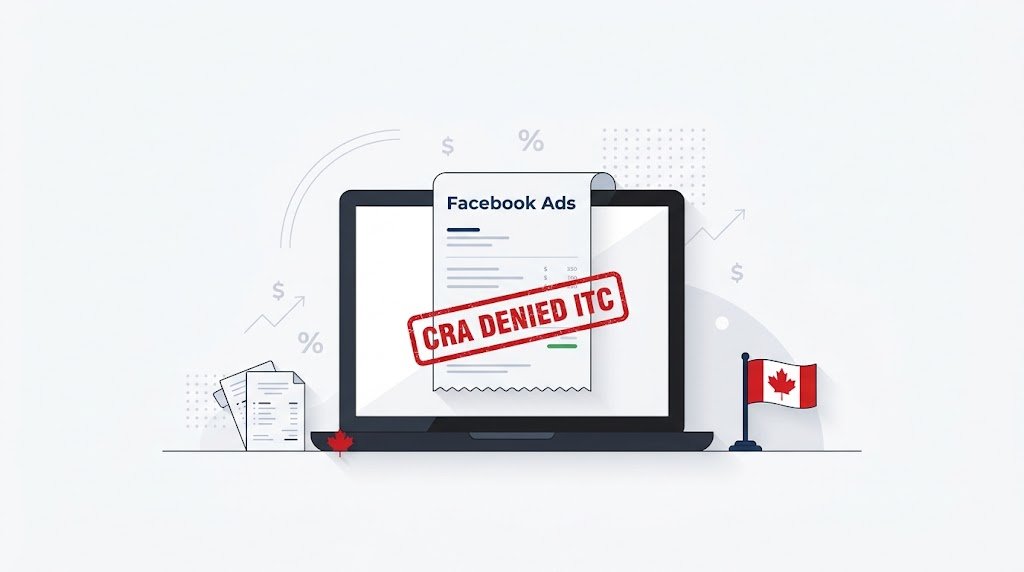
A common pitfall for unregistered Canadian businesses is allowing digital platforms to charge GST/HST on their monthly invoices. While this may appear to be a straightforward expense, the CRA has heightened its scrutiny regarding the permissibility of these charges as Input Tax Credits (ITCs). If a platform mistakenly applies GST/HST or if the business is not formally registered to claim these credits, the CRA may deny the deduction entirely. Furthermore, missing the requirement to update your business profile on platforms like Upwork or Facebook with your tax registration details can result in unrecoverable tax costs bleeding your margins.
IV. The Strategic Advantage of GST/HST Registration
Registering for a GST/HST account is a highly recommended strategic move for Canadian digital entrepreneurs and intermediaries. Registration not only updates your compliant status on the platforms you use daily, preventing the incorrect application of localized taxes, but it also unlocks the ability to claim ITCs. By formally entering the tax system, you can recover the GST/HST paid on virtually all your imported business expenses, ranging from overseas marketing spend to third-party software subscriptions. This ensures you do not absorb taxes that were meant to be business offsets.
V. Frequently Asked Questions
Q1: Why are digital platforms like Facebook and Upwork charging me GST/HST? A1: Non-resident digital platforms are required by the CRA to charge GST/HST to Canadian users unless those users provide a valid GST/HST registration number confirming their commercial status.
Q2: What happens if I do not provide my GST/HST number to digital platforms? A2: If you fail to update your account, the platform will treat you as an unregistered consumer or small supplier and automatically apply GST/HST to your service fees and advertising spend.
Q3: Can I claim Input Tax Credits (ITCs) on platform-charged GST/HST if I am not registered? A3: No. You must have an active GST/HST registration number with the CRA to legally claim ITCs and recover the taxes charged on your digital expenses.
Q4: Is the CRA actively denying input tax credit claims from digital platforms? A4: Yes. The CRA routinely audits digital expenses and denies ITC claims if the business was not registered or if the tax was improperly charged at the platform level.
Q5: How do I update my tax status on platforms such as Meta or Upwork? A5: You can update your tax information within the billing or account settings of each platform by entering your official CRA-issued GST/HST number.
Q6: Does the shift of responsibility apply to all digital services? A6: The rules broadly apply to cross-border digital products and services, meaning businesses must be diligent about maintaining correct tax settings across every vendor they utilize.
Q7: How can my accounting firm help navigate these digital tax complexities? A7: We assist businesses by evaluating their requirement for GST/HST registration, optimizing platform tax settings, and properly filing sales tax returns to maximize your eligible ITCs.
Q8: What are the risks of ignoring these CRA requirements? A8: Ignoring these requirements can lead to delayed growth, denied tax deductions during an audit, and unnecessary overpayment of unrecoverable taxes to third-party vendors.
Disclaimer: This article is for informational purposes only and does not constitute legal or tax advice. Corporate structuring and trust law are highly complex and subject to strict CRA regulations. Always consult with a qualified tax accountant and corporate lawyer before implementing these strategies.