Maximizing Business Deductions: A Guide to CRA-Approved Expenses for Canadian Corporations
I. Introduction: The Power of Deductible Business Expenses
For Canadian owner-managers and business owners, operating through a corporation offers excellent tax planning advantages, one of the most powerful being the ability to deduct legitimate business expenses. By carefully tracking and claiming expenses incurred for the purpose of earning income, you can significantly reduce your corporation's net taxable income and, consequently, your corporate tax bill. However, navigating what the Canada Revenue Agency (CRA) considers an eligible business expense versus a personal expense can be complex and requires a strong understanding of tax regulations.
II. Understanding CRA's Core Rule: The Purpose of Earning Income
The fundamental principle governing business deductibility in Canada is whether the expense was incurred for the purpose of gaining or producing income. The CRA generally allows businesses to deduct ongoing, current expenses required for day-to-day operations. However, expenses that provide a lasting benefit, such as purchasing equipment or vehicles, are considered capital expenditures and may instead be eligible for Capital Cost Allowance (CCA) over time. Furthermore, the expense must be reasonable in the circumstances—exorbitant costs may be challenged.
III. Common Deductible Business Expenses
If your business is active and generating revenue, many of your operating costs are tax-deductible. Here are some of the most common categories:
- Office Expenses: Routine supplies like stationery, pens, paper, and basic software subscriptions.
- Advertising and Marketing: Costs related to promoting your business, including digital advertising (Google/Facebook Ads), website hosting, and promotional materials.
- Travel and Meals: Reasonable expenses incurred while traveling for business purposes. Note that meals and entertainment are generally capped at 50% deductibility.
- Professional Fees: Accounting, bookkeeping, legal, and consulting fees paid to operate the business.
- Business Insurance: Premiums paid for general liability insurance, professional indemnity insurance, or property insurance.
- Home Office Expenses: If you operate primarily from a home office and meet specific criteria (it is your principal place of business, or you use it exclusively to earn income and meet clients), a proportional share of utility costs, internet, and property taxes can be deducted.
- Motor Vehicle Expenses: Costs related to driving a personally owned vehicle for business use, which can be claimed based on a detailed mileage log.
IV. Non-Deductible Expenses: What You Cannot Claim
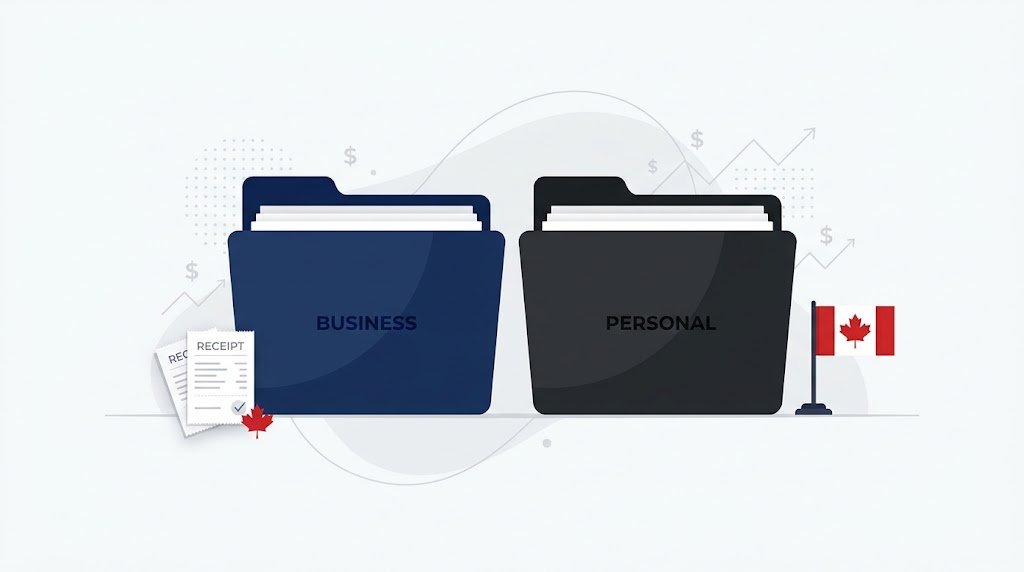
The CRA strictly prohibits deducting personal expenses from your corporate income. Blurring the line between personal and business spending can lead to severe penalties and reassessments.
- Personal Living Expenses: Groceries, personal clothing, recreational activities, and personal household expenses.
- Fines and Penalties: Any fines or penalties imposed by a government agency, court, or regulatory body.
- Commuting Costs: The cost of traveling from your personal residence to your regular place of business.
- Certain Clothing: Normal apparel worn for daily work (e.g., standard business suits) is typically not deductible unless it is protective or a specialized uniform.
- Life Insurance Premiums: Generally, personal life insurance premiums are not deductible, though specific rules apply for certain corporate-owned policies.
V. The Importance of Proper Documentation and Itemized Invoices
To successfully defend your expense claims during a CRA audit, organization is key. You must maintain detailed records, including itemized receipts, invoices, and bank statements, that clearly show the date, amount, and business purpose of the expense. Relying solely on credit card statements is often insufficient. Keeping an accurate general ledger and maintaining receipts for at least six years from the end of the last taxation year are essential practices for compliance.
VI. Frequently Asked Questions
Q1: Can I deduct all corporate expenses that are paid directly from my business bank account? A1: Not necessarily. Even if paid from a business account, if the expense is purely personal or capital in nature, it is not deductible against corporate income.
Q2: What is the rule for deductibility of business meals? A2: Generally, you can only deduct 50% of the cost of business-related meals and entertainment.
Q3: Is the purchase of a laptop or office furniture immediately deductible? A3: No. Large purchases providing a lasting benefit are considered capital assets and must be depreciated over time using Capital Cost Allowance (CCA).
Q4: Can I deduct the costs of my daily commute from home to the office? A4: No. Commuting costs between your residence and your primary place of business are considered personal expenses.
Q5: What constitutes proper documentation for tax deductions? A5: Proper documentation includes detailed, itemized receipts and invoices that clearly identify the vendor, date, line items, taxes paid, and the business purpose.
Q6: Are gifts and client appreciation events deductible? A6: Yes, client gifts and parties are generally deductible, subject to reasonable limits, and client meals are bound by the 50% rule.
Q7: What happens if the CRA disallows a business expense? A7: Disallowed expenses will be added back to your taxable income, and you may be charged interest and penalties on the additional tax owed.
Q8: Why does the CRA scrutinize home office expenses so closely? A8: The CRA sets strict criteria to ensure the home space is used exclusively for professional purposes to prevent personal living costs from being subsidized by the business.
Now, I will generate the image representing this blog topic, focusing on clean deductible receipts, tax savings, and organized documentation. Let me know if you would like to proceed with the image generation!
Disclaimer: This article is for informational purposes only and does not constitute legal or tax advice. Corporate structuring and trust law are highly complex and subject to strict CRA regulations. Always consult with a qualified tax accountant and corporate lawyer before implementing these strategies.