Managing Shareholder Loans: A Guide for Canadian Owner-Managers
I. Understanding the Shareholder Loan Account: Credits vs. Debits
For Canadian small business owners, the shareholder loan account is one of the most critical financial ledgers in the corporation. It tracks all financial transactions between you, the owner-manager, and your incorporated business. A credit balance means the corporation owes money to you (you have funded the business), while a debit balance means you owe money to the corporation (you have withdrawn funds in excess of what is due to you). Mismanaging this account can lead to unexpected tax reassessments and severe penalties from the Canada Revenue Agency (CRA).
II. The Importance of Segregating Personal and Corporate Funds
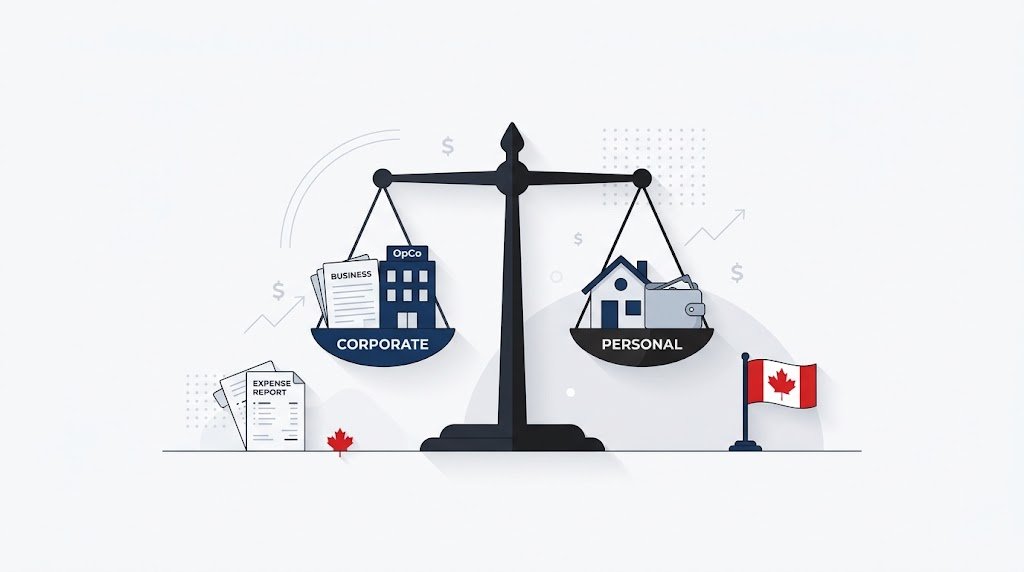
A fundamental best practice for any incorporated business is to completely segregate personal and corporate finances. Mingling personal and corporate funds creates significant accounting complications, blurs the legal separation between you and your business, and can create massive headaches during a CRA audit.
However, in the early stages of a corporation, obtaining traditional corporate credit cards or bank financing can be very challenging. Because of this, it is common during the startup phase for shareholders to use their personal credit cards or bank accounts to pay for legitimate business expenses. While this is understood in the beginning, moving toward a dedicated corporate banking structure as soon as possible is highly recommended to maintain clean financial records.
III. Funding the Business: Personal Expenses and Large Cash Injections
When you pay for business expenses personally due to the lack of a corporate credit card, the corporation essentially owes you a reimbursement, causing your shareholder loan account to grow as a credit balance. You can withdraw this credit balance out of the corporation and repay yourself perfectly tax-free at any time.
For larger funding injections, such as providing upfront working capital, you can credit the funds directly to the shareholder loan account as a liability. While recording this as a simple liability is standard practice, drafting a formal promissory note or a written loan agreement is highly encouraged to establish clear repayment terms, interest rates, and legal certainty, especially if there are multiple shareholders.
IV. The One-Year Rule: Correcting Debit Balances and CRA Interest Implications
If you withdraw corporate funds for personal use and create a debit balance in your shareholder loan account, you must be extremely cautious. The CRA requires that any debit balance be fully repaid to the corporation within one year after the end of the corporation's taxation year in which the loan was made.
If this one-year rule is not met, the outstanding amount is added to your personal taxable income for the year, resulting in immediate tax consequences. Furthermore, if a debit balance exists, the CRA generally expects the corporation to charge a prescribed interest rate on the loan; failure to charge the appropriate interest can result in a taxable benefit being attributed to your personal income.
V. Proper Documentation: Expense Reports and Loan Agreements
To support the accumulation of credit balances in your shareholder loan account, robust documentation is mandatory. You must maintain detailed expense reports accompanied by itemized invoices and receipts for all business expenses paid personally. Relying solely on credit card statements is typically insufficient in the event of an audit. By establishing a formalized process and retaining precise records, you ensure that your reimbursements are fully defensible and that your shareholder loan remains accurately aligned with reality.
VI. Frequently Asked Questions
Q1: What is the difference between a credit balance and a debit balance in a shareholder loan account? A1: A credit balance means the corporation owes money to you (e.g., for personal funds used to pay business expenses). A debit balance means you owe money to the corporation (e.g., for unauthorized or excessive personal withdrawals).
Q2: Can I repay myself from the shareholder loan account tax-free? A2: Yes. Any repayment by the corporation to reduce a credit balance in the shareholder loan account is entirely tax-free because it is simply receiving a reimbursement for money owed to you.
Q3: What happens if I create a debit balance in my shareholder loan account? A3: If a debit balance is not fully repaid to the corporation within one year after the end of the taxation year in which it was created, the CRA will include the outstanding amount in your personal income as a taxable benefit.
Q4: Should I use a formal promissory note for large cash injections into my business? A4: Yes, drafting a formal loan agreement or promissory note is highly recommended for large cash injections. It defines the loan terms and provides legal protection and clarity between the shareholder and the corporation.
Q5: Do I need to charge interest on loans between the shareholder and the corporation? A5: Yes, if you have a debit balance, the CRA requires the corporation to charge a minimum prescribed interest rate to avoid a taxable shareholder benefit being added to your personal income.
Q6: What documentation do I need to support business expenses paid from my personal credit card? A6: You must maintain organized expense reports backed by itemized receipts and invoices that clearly state the date, vendor, description of the purchase, and its business purpose.
Q7: Can a credit card in the shareholder's name be used for corporate expenses? A7: Yes, it is common during the early years of a corporation. The expenses are recorded as corporate debts, and the payments made by the shareholder grow the shareholder loan credit balance.
Q8: Why is it vital to segregate personal and corporate funds? A8: Mingling funds complicates accounting, compromises the legal liability protection of the corporation, and creates unnecessary risks during a CRA audit.
Disclaimer: This article is for informational purposes only and does not constitute legal or tax advice. Corporate structuring and trust law are highly complex and subject to strict CRA regulations. Always consult with a qualified tax accountant and corporate lawyer before implementing these strategies.