Navigating U.S. Expansion: A Tax and Banking Guide for Canadian Corporations
I. Introduction: Expanding Your Canadian Corporation into the U.S.
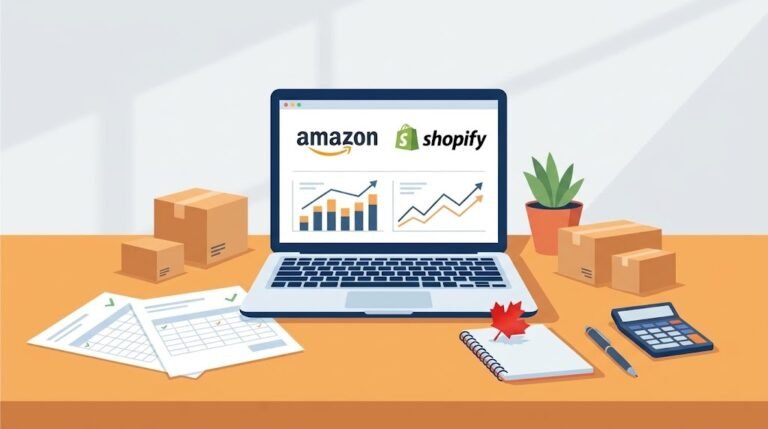
For many Canadian entrepreneurs operating a successful e-commerce business through a local corporation, expanding into the United States is the next logical step. The U.S. market offers an immense customer base, particularly for sellers on platforms like Amazon and Shopify. However, with cross-border expansion comes a new web of legal, banking, and tax complexities. Ensuring your business is structured correctly from the beginning is vital to protecting your profits, maintaining compliance with both the Canada Revenue Agency (CRA) and the Internal Revenue Service (IRS), and avoiding unnecessary administrative headaches.
II. LLC or C-Corp vs. Canadian Corporation: Structuring Your U.S. Operations
A common question asked by Canadian sellers is whether they should open a U.S. Limited Liability Company (LLC) or a C-Corp to house their American operations. While you certainly can open an LLC or a C-Corp in the United States for your e-commerce business, it is generally not encouraged if you plan to operate out of Canada.
The Dual Residency and Double Taxation Trap: If you open a U.S. corporation but manage and operate it from Canada, that corporation can be declared a resident of Canada for Canadian tax purposes based on central management and control rules. This means you will have to file corporate income taxes in both Canada and the United States, often leading to double taxation and massive administrative burdens. Furthermore, Canada views a U.S. LLC as a corporation for tax purposes, while the U.S. views it as a pass-through entity. If a U.S. LLC pays a dividend back to your Canadian corporation, the tax treatment by the CRA can be highly punitive, subjecting the income to high passive tax rates.
Compliance Costs: IRS requirements for non-resident-owned U.S. entities are very complex and are constantly changing. Once you open a U.S. LLC or a C-Corp, you will be subject to multiple stringent reporting requirements from day one. If you plan on operating out of Canada, we strongly recommend opening a Canadian corporation to drastically reduce your ongoing compliance costs.
III. U.S. Banking for Canadian Sellers: Virtual Accounts and Cross-Border Options
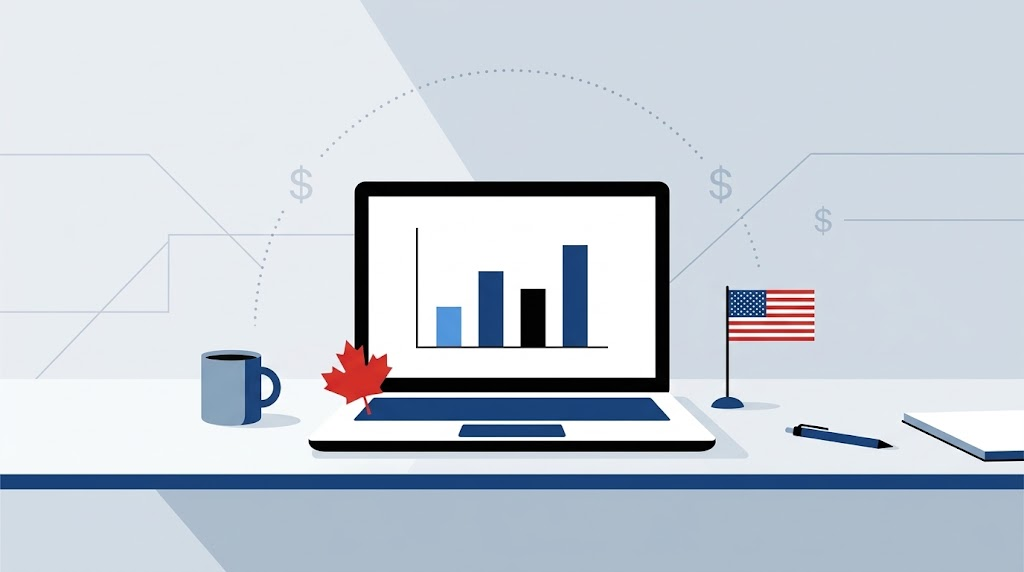
To sell effectively in the U.S. and pay foreign suppliers, you need to conduct transactions in U.S. dollars. While most U.S. banks will require a U.S. address or a U.S. entity to open a business bank account, it is still entirely possible to open a U.S.-domiciled bank account without having one.
Virtual Bank Accounts: Canadian sellers have excellent workarounds through virtual banking platforms. You can use virtual banks such as OFX, Payoneer, or Wise (formerly TransferWise) to collect payments directly from Amazon and pay your foreign suppliers in USD. Those accounts act exactly as if they are an actual branch located in the United States, providing you with real U.S. routing and account numbers.
Cross-Border Banking: You can also open cross-border USD accounts with major Canadian banks like BMO, RBC, or TD directly under your Canadian corporation. This allows you to keep your banking relationships consolidated. To move the money across the border, you can use international wire transfers or write checks (though you must keep in mind the holding period for clearing USD checks at your Canadian branch).
IV. The Necessity of an EIN and the Associated Complexities
Even if you operate through a Canadian corporation, you may need an Employer Identification Number (EIN) to open certain U.S. bank accounts, register for state sales taxes, or comply with specific platform requirements. An EIN acts as a tax identification number for your business in the U.S.
You can obtain an EIN for a Canadian corporation without a U.S. address or U.S. citizens involved by applying directly through the IRS. However, acquiring an EIN does add layers of compliance. Once your Canadian corporation obtains an EIN, it may trigger information-sharing requirements under U.S. tax laws, meaning you must be diligent about tracking your U.S.-sourced income and ensuring you do not accidentally trigger U.S. federal tax liabilities by creating a physical presence.
V. The Canadian Tax Landscape: Understanding T2NR Filing Requirements
When your Canadian corporation sells products to U.S. customers, it may be subject to U.S. corporate income tax. However, the U.S.-Canada Tax Treaty protects most Canadian e-commerce sellers from owing U.S. federal income tax, provided the corporation does not have a "Permanent Establishment" (PE) in the U.S. Typically, utilizing a third-party logistics center or Amazon's FBA warehouse does not constitute a permanent establishment.
The T2NR Filing Requirement: Although you likely will not owe U.S. income tax, the IRS often requires non-resident corporations to file informational tax returns to officially claim this treaty exemption. Conversely, on the Canadian side, the CRA requires robust reporting of your global income. Most Amazon and Shopify sellers simply handle their U.S. sales as part of their regular Canadian corporate tax return, converting their USD revenue into CAD for tax purposes.
VI. Frequently Asked Questions
1. Should I open a U.S. LLC or C-Corp if I live and work in Canada? While you can, it is strongly discouraged. Operating a U.S. entity from Canada can cause the entity to be deemed a Canadian resident for tax purposes, forcing you to file corporate taxes in both countries and significantly increasing your compliance costs from day one.
2. How does the CRA treat dividends paid from a U.S. LLC to a Canadian corporation? Because the CRA views a U.S. LLC as a corporation (unlike the IRS pass-through view), dividends paid from the LLC to a Canadian parent company are often treated as passive income, which is subject to highly punitive tax rates in Canada.
3. Do I need a physical U.S. address to get a U.S. bank account? No. While traditional U.S. branches require one, you can use virtual banks like OFX, Wise, or Payoneer, which act exactly like an actual U.S. branch, or you can utilize cross-border accounts through Canadian banks like BMO, RBC, or TD.
4. How do I move money from my cross-border USD account to my Canadian account? If you use a cross-border account with a Canadian bank, you can move funds via international wire transfers or by writing checks, though you should factor in the holding period required to clear checks at your local branch.
5. Do I need an EIN for my Canadian corporation to sell in the U.S.? You do not strictly need one to sell, but you will likely need an EIN if you wish to open certain U.S. bank accounts, register for U.S. state sales taxes, or deal with specific vendor requirements.
6. Does having an EIN mean I have to pay taxes in the U.S.? No. An EIN is simply an identification number. Your obligation to pay U.S. federal income tax is determined by whether you have a "Permanent Establishment" (like an office or employees) in the United States.
7. Does using Amazon FBA create a Permanent Establishment in the U.S.? Generally, no. Under the U.S.-Canada Tax Treaty, merely storing inventory in a third-party warehouse like Amazon FBA does not create a fixed place of business or Permanent Establishment.
8. What is the most cost-effective legal structure for a Canadian Amazon seller? For the vast majority of Canadian sellers, operating entirely through a Canadian corporation is the best route. It allows you to claim treaty exemptions in the U.S., avoid dual-filing corporate returns, and keep accounting and compliance costs manageable.
Disclaimer: This article is for informational purposes only and does not constitute legal or tax advice. Corporate structuring and trust law are highly complex and subject to strict CRA regulations. Always consult with a qualified tax accountant and corporate lawyer before implementing these strategies.